Pages

Showing posts with label Burger Records. Show all posts

Friday, December 28, 2012

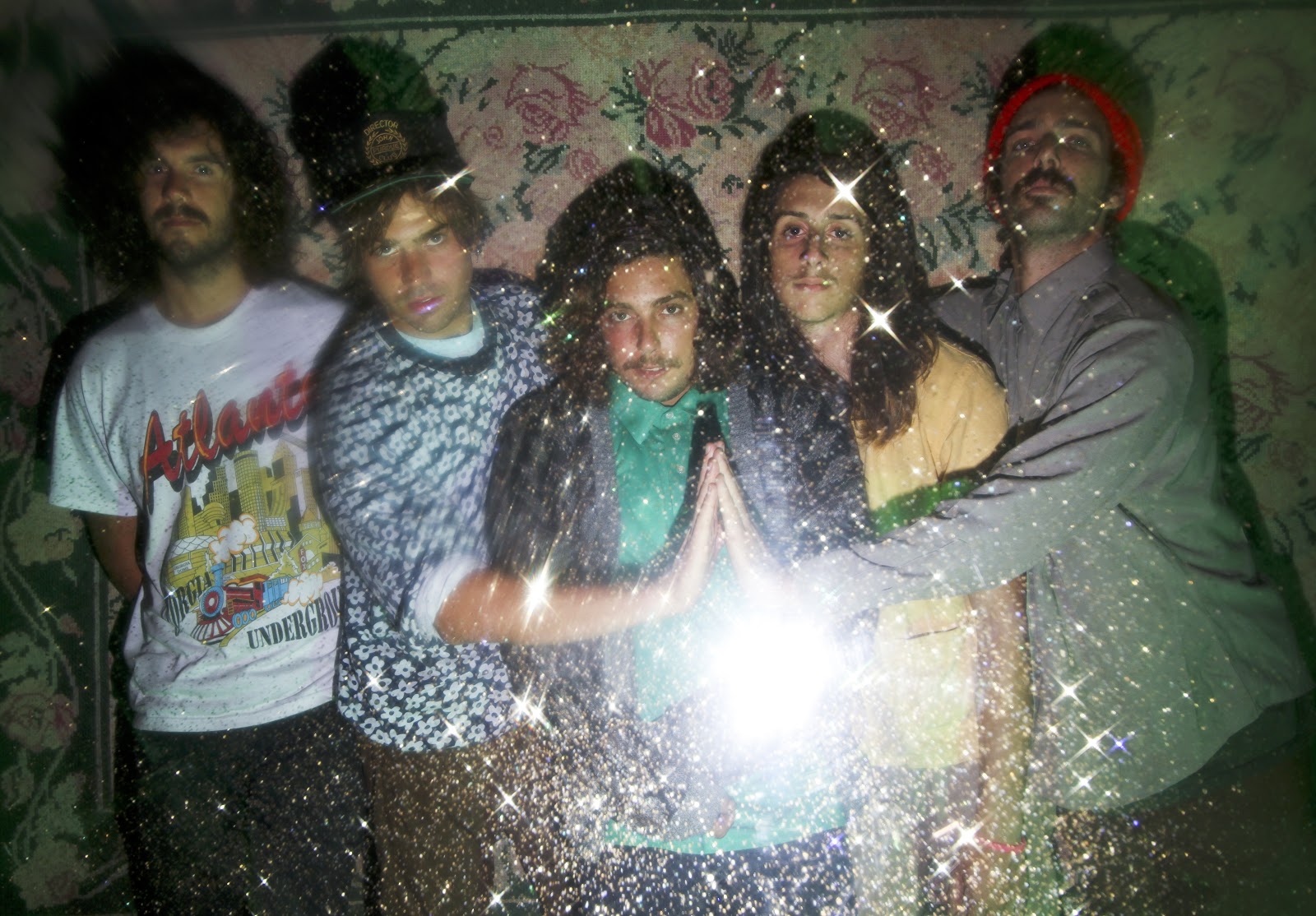
The Growlers release "Hung At Heart"


(L-R) Scott Montoya, Matt Taylor, Brooks Neilsen, Anthony Perry, Kyle Straka
            Down to the Newport peninsula, just off of 56th St., I have no trouble finding a parking spot now that the crowds are gone and there are mere days left in the summertime season.  Lead singer of local band the Growlers, Brooks Neilsen, is just about to join drummer, Scott Montoya, in the water for a quick session.  They only have three days to mellow out in between tours, but amidst the constant list of band-related things to take care of, the boys detach from a decent swell to tell me about their newest full-length release, Hung at Heart.

How was Coachella 2012?

Brooks Neilsen:  (Laughing hysterically) It was good.

Scott Montoya:  It was hot.

Neilsen:  I felt like it was the first time that we played like a big stage at a festival.

How was the sound?  Those systems are some of the biggest in the country, did it feel like that?

Montoya: Not really.

Neilsen:  It’s all the same shit.  We got a little overly nervous and then we got out there, and it’s the same shit.  I think the only thing we were thinking about was how hot it was.  It worked out.  It’s hard to get people into it when it’s fuckin’ 115 degrees in the sun.

There wasn’t any covering on the stage you played?

Montoya:  (Shakes his head no.)

Neilsen:  There were some people misting other people with mister guns, so I think that helped a little.  It was 4:20pm and they were all stoned.  All in all it was good.

And you played both weekends of Coachella?

Neilsen:  Mm-hm.

Montoya:  First weekend wasn’t as hot.

Neilsen:  First weekend was nice.  We went in, played, and went home.  Second week we kind of stuck around for the shenanigans.  Scott had fun.

Montoya:  I had a lot of fun.

You always have fun.

Montoya:  I was so hot I thought I was going to overheat and pass out.

Neilsen:  I pretty much did.

Montoya:  I didn’t know whether to play faster to get it over with, or play slower and conserve my energy.  I was thinking that the whole time, trying to get to the end.  I just wanted it to be over, it was horrible.

Neilsen:  I drank too much and overheated and fell off of the stage.

You fell off of the stage?

Neilsen:  It was like 10 feet tall.

I’m glad to see you survived.  That’s what the medics and security are for, right?

Neilsen:  Yeah, I fell on security.

Montoya:  Then we went back to a trailer and met a guy that played saxophone.  There was this trailer next to the stage that was really air-conditioned—it ruled—and met a guy that was emotionally scarred by ‘Careless Whisper’ on the saxophone for some reason.  It was really funny.

You just played FYF Fest also?  Was that a little more bearable?

Montoya:  No, it was just as fuckin’ stressful.

Neilsen:  Well, we got to do whatever the fuck we wanted there on the stage, and decorate the stage and do weird shit with projections and whatnot, which was rad.  In the end, it looked really cool and great, but they wouldn’t approve anything that we were doing.  It was like, ‘Nah, you can’t do that, no nipple tassels, no fireworks, none of your own lighting…’

Montoya:  No goat.

A goat?

Neilsen:  We were going to bring a goat on stage.  We also faked Warren’s (of The Abigails) death.

Yeah, didn’t OC Weekly spread it around?

Neilsen:  Yeah, I think they fell for it a little bit.  It was a good, big, tasteless joke.

Montoya:  It could have gone over better…

Neilsen:  Fuck you Scott.

Montoya:  It went over great!

Neilsen:  He didn’t like my delivery, he thought I did it too emotional.  I kind of bummed everyone out.

Montoya:  It was really believable.

Neilsen:  I’m really good at that shit.  I got them to believe Warren (Thomas) died.

Montoya:  There were a few people that started crying.

Neilsen:  And Warren was backstage and was supposed to come out and be like, ‘Hey.’  (Laughing) He just, he didn’t come out…

So that inspired the press release?

Neilsen:  Yeah, they called him like, ‘Are you dead?’  He was like, ‘No, I just passed out for three days.  Sometimes you get a little tired, and I was a little tuckered.’

Montoya:  It was fun.

Neilsen:  It was good, the whole time there was crazy shit.

Montoya:  We had a lot going on and it was a lot to manage, especially when there were people getting pretty drunk.

Neilsen:  It was in the midst of so many things—moving our fucking warehouse out, and we were about to hit the road for a tour—so it was a lot of shit.

The Growler lair is gone?

Montoya:  Lease is up.

Neilsen:  The warehouse is gone, everything’s in storage, and we are road-dogs.  We’re looking for a warehouse when we get back.

Will it be local?

Neilsen:  Costa Mesa or Long Beach.  I just found some great spots in Long Beach, so my broker is hitting them up right now so I can go look at them tomorrow morning before we take off.  It’s going to be bigger, badder, weirder, cleaner.

Cleaner?  You say that now…

Neilsen:  I threw away half of that warehouse in the dumpster.

Were you still a little emotionally attached to that stuff?  I know how you like to hoard...

Neilsen:  Yeah, but I’m finally over it.  It felt good to throw that shit away.

Montoya:  Purge.

Neilsen:  Baby steps, ‘k.  And buying less things on the road.  I’m getting better.

Montoya:  Purge.

Let’s talk tours.  You just got back from a tour…how long were you out and where did you stop?

Neilsen:  Almost two weeks.  West Coaster…  Yeah we went to Portland, Seattle, Vancouver, Eugene, Arcata, Humboldt, Chico, San Luis Obispo, San Francisco.  Wow, I think that’s everything.

And you’re back on the road for another tour in two days?

Neilsen:  That one is for three or four weeks.  I’ll get back the 16th or 17th, then we play October 19th and 20th at Observatory.  This tour’s gonna be really good.  This one is like perfect time of year and they are all spots that we’ve been building.  We’ve been touring for a little while now, so we don’t have to show up to any empty venues anymore.

It just takes time to develop your crowd, right?

Neilsen:  This last one was great.  It was Guantanamo Baywatch and Cosmonauts, who are great people, who party.  This time we jump on with Florida Kilos, a touring band, likes to drink Tequila and have fun.  It’s gonna be great.

You look kinda tired when you say that…

Neilsen:  (Laughs) I know, when I’m home right now I get to just surf and chill…

And recharge your batteries?

Montoya:  Touring is tiring.

Neilsen:  This tends to happen in between each tour, just at least three days at home to surf and be back.  You only need to be home for a short amount of time to get bored, like, ‘Alright, I’m ready to go back on the road.’
Let’s talk about the new album, Hung At Heart.  You write a ton of music all the time, but how did you choose for this collection?

Neilsen:  I don’t want to go through all the bullshit, but the album has been somewhat cursed.

Montoya:  It’s a nightmare.

Neilsen:  It’s been a fucking nightmare.  I mean, it’s too easy—we wrote the songs, the songs were good, we recorded the songs, should be over with.  But the record didn’t sound that good, we threw it away, we re-recorded it.  It took forever, shopped it out, people act like they want to do something, then they give shitty offers, so finally we said, ‘Fuck it,’ and put it out on Everloving (Records).  It was supposed to come out in October.

You guys started the recording process with Dan Auerbach?

Neilsen:  Started with Dan.

Too bluesy or what?

Neilsen:  You know what, we went in there with very little time.  We had written the songs rough-draft and didn’t have time to actually write them into songs.  Then we were touring, we changed drummers…

Montoya:  We just got back from Brazil too.

Neilsen:  Just got back from Brazil, went straight over there, jumped in and recorded 18 songs in ten days.

Montoya:  They weren’t even done being written.

Neilsen:  So we had to get there in the morning, hung over, write ‘em, record as much as we could everyday, and then party with Dan at night.  We got home, and the record was taking a long time to be mixed.  We originally wanted it to be tape, it wasn’t.

Montoya:  Dan just came out with an album too, so he was really busy touring around.

Neilsen:  He was busy and we had taken so long that we had been playing the music live.  We had changed the songs a bit and they sounded better and were better written, so we’re like, ‘Fuck this, let’s go record the record over, on tape, down the street.  We have the songs better written, we’ll take our time and do them right—‘cause it was taking a while anyway—and it came out better.

You never mention Mike McHugh?

Montoya:  Yeah, Mike helped.  Mike did the recording.

Neilsen:  (Laughing).

Montoya:  Mike helped us record.

Has he recorded everything for you guys through the years?

Neilsen:  No, we just did a 7” with him before that.

Scott, how much of the catalogue have you recorded?

Montoya:  I did the earlier stuff.

Neilsen:  All the earlier stuff.

Montoya:  Up until Gay Thoughts.

Neilsen:   This time we wanted to go into the studio, but since it didn’t work with Dan, we still wanted to go into a professional studio.  We wanted to do it on tape, so we did it with Mike, and Mike’s the man, but it was taking a while.  But we did it, we finished it, and the record is supposed to come out November, but they fucked up on production of the vinyl so we missed deadline, so now it’s going to be out in January.  We already have everything set up and people jonesing, so for the fans, we’re doing like a limited tape on Burger Records that’s all the rough-drafts from the record and some extra songs that haven’t been recorded.  So we’re going to have double, and that’s just more stuff that’s cool.  And the CD and the tape for Hung at Heart will be out in January.  October for the Observatory shows with Burger are going to have this tape and we’ll do a listening party for the Hung at Heart album.

What types of songs are we to expect?  Same feel as before?

Neilsen:  (Sarcastically) Nope, we went all dance music—it’s like cross-trance and I have the sound-effect on my voice like Cher…  It’s a little of the same Growlers.  We kind of picked some happier stuff, and some weirder style songs, kind of funkier.  But it’s got everything, some reggae-sounding stuff.

Montoya:  It’s cleaner though, the recordings are better, for sure.  Mike’s really good.

Neilsen:  Better vocals, more in front, just more legible, and we’re stoked on it.  But, after a month of songs, we wanted to hear something new and make something new, and it’s been too fucking long.  This thing needs to be out there so we can go make a new record and move the fuck on.

Baby steps…  So eventually you’re planning on releasing cassette, vinyl, CD, and digital versions of the album?

Neilsen:  It all got pushed back.  I gotta change it right now ‘cause all these people think we’re releasing all that at the show.  We’re still gonna offer a limited cassette tape with Burger that’s gonna be the demo-songs from and some other unreleased songs on there.  It’s going to be that cassette tape, but we’re also gonna do, you buy two days, you get to go to the listening party, you get t-shirts, CDs—all this different shit.

Montoya:  A listening to the new record, not the demos.  We’re having a listening party…

Neilsen:  In January.  Yeah it got pushed back.  That was going to be the whole deal, but, what can I do?  We thought, at least give them something, ‘cause I was thinking, fuck, we gotta pull out the record and bum everyone out.  It’s mostly close fans that are going, so I think they’re going to enjoy the demo songs—our close friends and my chick do.  They like that shit more.

There’s a character about demos…

Montoya:  It’s way more raw.

Neilsen:  And there’s imperfections and things that you get attached to.  I like when you can hear someone coughing or something.

That’s how the 7” felt to me.  It wasn’t perfect, but you listen and you get accustomed and then you love it.

Neilsen:  Totally.


So next year you’ve got an album coming out in January.  Will there be a trip to SXSW or any tours to go along with that?

Neilsen:  I don’t know if we’re gonna do SXSW yet.

Montoya:  South By is exhausting.

Neilsen:  We enjoy it, but I don’t know how much these festivals do for you.  I mean, they go and they see you, and it’s like they’re burned out.  If they saw you for five minutes, they keep it in their head that they saw you, and then you’re back there in a month and they’re over even showing up.  I don’t know, it’s weird.  People are all over-stimulated.  You see a hundred bands and it’s like, ‘Uhhggg.’  And we do the same thing, we go and we just party.

Montoya:  By the end we’re fucked.

Neilsen:  We might do it again this year, but we’re definitely going to tour heavy starting in January.  We’ll tour for five or six weeks, come back for a little bit.

Check out what the Growlers are up to these days here.

Saturday, March 31, 2012

Burgerama!

Burgerama is happening as we speak!  How many months did it take to prepare all of this?

Sean Bohrman:  For probably two months or so, since the beginning of the year.  But it wasn’t just this I was planning.  We also have a festival going on in San Francisco called the Burger Boogaloo, and that started yesterday.  There are two shows today, and two shows tomorrow.  I’m driving up there tomorrow for that.  We just got back from SXSW two days ago.  We did five shows there that sold out.  They were huge shows and Bill Murray was there, it was crazy.  It’s just been really really hectic ‘cause Lee (Rickard) has been on tour with The Nerves, and Brian (Flores) was in the hospital for a little while.  Me and Bobby were the only two working, and we don’t have a car between us, so the weeks leading up to SXSW were really really crazy and we didn’t get everything we wanted to get done.  But for the most part, everything was a success.  All the stuff we had been planning for worked out, and thank god.

Who’s manning the store while you’ve been gone?

Brian is actually out of the hospital and he can’t really party or anything, so he’s just kind of taking it easy hanging out at the store.  Patty, our friend, was watching it while we were gone.  Everybody is coming together to help the Burger cause.


Sean Bohrman (On right)
 
White Fence
 
 
Dirt Dress
Keith Morris of Off!
Wavves

Sunday, December 11, 2011

Inside the Burger Bubble: A Q&A with Burger Records

            Recently, I found myself on the 91 Freeway, exiting State College Blvd. in Fullerton, heading over the train tracks, and turning left into an unassuming strip of small businesses amidst a neighborhood of industrial companies.  The only signs of Burger Records were a modest red and white light box sign attached to the building above the entrance, and a few bins of dollar records placed out front to entice potential customers.  But once I swung the glass-paneled door open, I was greeted by the lingering scent of Nag Champa incense, the glow of green walls the color of grass in the Springtime, a premium tune being emitted via vinyl from speakers in the back, and an eclectic mix of records and music oddities that had been discovered on Craigslist, at swap meets, or the local non-profit retail shop.  Owners and operators Sean Bohrman, Lee Rickard, Brian Flores and Bobby May greeted and invited me to the stock room in the way back filled with VHS tapes, record back-stock, posters, cassette tapes, crates, chests, bookshelves, tables, and couches to tell me about how the business began before the doors of the establishment officially opened two years ago, and what it means to truly be in the ‘Burger Bubble.’

Before Burger Records even existed, did all four of you already know each other?

Lee Rickard: Yeah.  We’ve been doing the label about five years.  It all started with mine and Sean’s old band Thee Makeout Party!, and Brian (Flores) used to have a record store called Third Eye Records.  He was a fan of our music, and he actually chipped in and paid for half of Burger recording number one, but he had his own label at the time called Yellow Sun Records.

Bohrman: I met Lee back in high school back in ’98.

Rickard: We became friends around Halloween time of ’98 at Koo’s Cafe and he was making fun of my long hair.  Then he started taking me to the movie theater.  I never really watched movies, so I finally started entering pop culture.  I grew up on a horse stable in Anaheim called Rancho Del Rios Stables that was established in 1970.  My mom helped run it for 30 or so years.  That’s where I kind of learned how to run a family business, and a lot of that stuff transferred to Burger.  We’re still working out the kinks.

That’s always a constant part of business I suppose?  When did you decide it was time to start the shop here, and why did you choose Fullerton?

Bohrman: Well I grew up in Anaheim.

Rickard: We met in East Anaheim.  We went to Katella High School.

Bohrman: Then later we had Thee Makeout Party!, and we started playing with this band called Audacity, who were from around here and are really good.  That’s how we met Bobby.

Bobby May: I’m from Fullerton, and Audacity is from Fullerton, and we all went to Fullerton High School.

Rickard: But when we truly bonded with Bobby, we were driving back from Brea’s Best and we saw Bobby walking by his lonesome…

Bohrman: …just down the street and we were like, ‘Hey we know that guy, pull over.’  And so we turned around and then we picked him up.  Then we went to like three shows that night.  It was a crazy night.

Rickard: We played a show sponsored by Vice and Colt 45.  Then we went to another party, and another party at the end too.  It was a hectic night.

Music and partying basically brought you guys together?

Rickard: Yeah, and same with Brian.  He had his record store where we used to buy all of our records.

Bohrman: I worked right next to there for years.  I was a graphic designer and on my lunch breaks I would go there and look at records.  We would trade music and we had a lot in common.

So Brian, you’re a little bit of the ringleader over here then?

Brian Flores: I went to like all of Thee Makeout Party! shows.

Bohrman: We took him on tour across the country.

Rickard: Multiple times.

Flores: We had been hanging out for a while before we opened the record store.

Bohrman: I was working at the magazine, and I was going to go on tour with Makeout Party, and my work wasn’t going to let me go, like they had two times before, because the economy went bad.  Then I decided I’m just going to quit after working there for four and a half years.  If I had saved another half a year, I would have gotten like $10,000 matched for my 401k, but I didn’t.  I just cashed out my 401k and got $7,000, and opened the store with Brian when we got back from tour.  It’s been going really well.
 
(L-R) Bobby May, Sean Bohrman, Lee Noise Rickard, Brian Flores
Photo by Olivia Hemaratanatorn
No regrets?

Bohrman: No.  At the time, I would drive around and just start to think about things, and I’d think, ‘What am I doing?’

Rickard: Well the beginning process with all the paperwork and the political aspect…

Bohrman: It’s the worst.

There are quite a lot of hoops to jump through.  Has the ‘bad economy’ affected your business at all?

Bohrman: It hasn’t really affected us as a store because people continue to buy music.  Last year around Fall ‘10 was our slowest time that we’ve had in the last two years.  This year hasn’t slowed down, which is good.

Rickard: Art thrives in times of desperation.  That’s what fuels the fire for the freaks.  And there’s a handful of people that buy nearly everything we put out, and that keeps us floating and it encourages us to put more and more out.  So everyday we’re doing layouts and every week we’re putting out new releases.  The ball is rolling, as they say.

For a band or an artist, their success seems to depend on if the vessel is genuine.  It seems like you have an excellent vessel floating here.

Rickard: We try to stay positive, and just seeing things and believing they can happen.  It’s easy to go, ‘Well that’s tough, and that’s gonna be hard, and that’s not gonna happen for this many reasons.’  It’s like, it can happen, and if you already believe that, then you can get your partners to believe that.  Then everyone believes who are on the same wavelength, like your friends and family.  You believe, and then it just blows up.  As long as it’s positive, and you’re doing good and helping other people, it will come back to you ten-fold.

So you started the label before you opened the store?

Rickard: The store has been open for two years, and the label has been around for a handful of years.  Before the label, we were writing Burger Productions on our artwork. As far as legitimizing over the last two years, the store has been a front for our religion.  People from all over the world come here, it’s pretty cool stuff.

Brian, you had your record store Third Eye Records.  How long have you been in the industry?

Flores: I’ve been in the music industry since I was about 17 years old.  I worked for Tower Records up north in San Francisco.  My goal always was to work for a major record label in artistic development.  I interned for two years before opening my own store, and then I finally did it.  So I was doing that sort of work up north, developing bands was what I wanted to do, but I found out the industry was what I hated, and everything started collapsing and there were mergers and stuff.  My job was not secure at all, so I freaked out.

Is that when you decided to start your own business?

Flores: It took a little while, but I knew even if I wasn’t working at a record store, I’d be volunteering at a record store.  I just had to be around it.

I definitely understand the need to have music around all the time.

Rickard: It’s a ritual; it’s spiritual.  When you listen to a record, in ten or 15 minutes, you’re going to have to flip it over.  In between, you have time to read every detail and look into every nuance.

We’ve lost that aspect as we’ve moved into a digital age?  When you have a computer with thousands of songs on it, you can hit the space bar to play, just let it run, and you don’t have to think about it that much.

Rickard: If you have a computer and a space bar.  But when you live in space and the world is your bar, you just go with the flow and it’s easier for us to make friends with all the rock and roll bands that are playing.

Flores: Burger Space (laughs).

With vinyl, it’s necessary to stay connected—you have to flip the record and have more of a relationship with it.

Rickard: Exactly.  It’s more up front in your mind, and it’s not something like a CD where you can listen to it while you’re driving.

Sean, what are you drawing over there?  You’re a lefty, eh?

Bohrman: Yep, just doodles.
 
Tell me more about the label. I would ask whom you’re working with, but there is a long list of artist names.

Rickard: We have done over 150 some odd releases thus far.

Bohrman: We’re adding new stuff everyday.  There’s so much good music happening right now that we’re just trying to keep up with it.

What do you think about the majors?

Rickard: We just do our own thing.  If you can push a record and believe in it.  The majors really believe in it, but…

May: Jive, Arista, and J Records all went under yesterday.  They all collapsed under into RCA and they got rid of them.

Rickard: That just shows the foundation of those labels.  They lose so much when they blow up and they turn into something that has no soul behind it.  We’re thriving because we believe in something, that’s not just our imagination, but all of our imaginations, including the bands and our friends.  It turns into a bigger thing.  It’s not that manipulated.

I wonder if those guys at the majors wake up and feel the obsession like you guys do?

Flores: It’s about business and numbers.

Rickard: We’re passionate about it.  Our numbers may be small, but they have grown.  We want every tape to get in the right hands.  It’s not about collecting money all the time, it’s more like, ‘You need to hear this.’  If it triggers something, then we just want to spread the gospel of rock and roll because we believe in the music.

I think you guys would be doing that even if you didn’t have a record store.

Rickard: Sean and I would go to the swap meets early in the morning on the weekends, and dig through records.  We would buy great records over and over again.  If you find a great record for a $1, you’re going to buy it and give it to your friend and tell them, ‘This will change your life.’  It’s a good feeling and that’s what the store is basically.  It started with our own collections, and then turning our friends onto it.

Community seems to be a big thing for you guys, and I notice you put on shows here at the shop, and also get the locals involved with label production as well.

Rickard: When we had a band, we would do whatever it took to make shit happen.  There’s a handful of people that do shows at their house, and touring bands come through and they are down to make shit happen.  We’re down too.  People come through and say that nothing else is popping up, and I’ll be like, ‘Yeah, you can play the store.’  It’s a big deal to some, and a big deal to give that outlet.  All of the neighborhood is doing awesome too.  They want to hear the bands.  Feeding People, Cosmonauts, Cum Stain, Audacity, Death Hymn—there’s too many bands in the neighborhood to even remember.

How do bands usually contact you guys? Or is it you reaching out to them?

Rickard: Occasionally we do reach out to bands—shit that we’re super horny for.  We’ll send vibes, and that’s how we got to work with some of the bigger artists like Milk ‘n’ Cookies.  A lot of friends from the community have turned us on to stuff after a while.  Touring got us in touch with a lot of people too.

Bohrman: We hear about bands sometimes through friends.  Every once in a while, we’ll get a demo or something from a band.  We get demos all the time, but every once in a while, we’ll get one that’s really good.

Rickard: We want to know that people, and if we want it to be like a friendly family-based thing, it’s not like we’re just trying to get the big dogs to make it look legit.  We know what it is.  It’s organic, and we’re really into those records at the time.  We get obsessed.  We’re freaks, or whatever you want to call it.  We’ll listen to records over and over again for however many days, weeks, months, or years. It’s all the bands that make Burger.  We just love them so much that we give them an outlet.  If they want to make a tape, we’re stoked.  Like The Go, was a favorite band of ours and now we’re putting out their box-set.  They’re like, ‘You like us?  You really really like us?  We’ll will you do this?’ and we’re like, ‘Yes.’  So we’re doing a five-tape box set that should be out for the holidays.

Most bands don’t exactly get ‘the treatment’ when they’re on the road playing venues and meeting people.

Rockard:  Yeah, touring in America at $5 a gallon for gas.  We did it for years.  We’ve always been like the outsiders or like the freaks, or the socially awkward people, and we have our moments of being personable, but it’s taken a lot for us to come out of our shells.  It’s nice when people say, ‘We like what you do.’  There’s a handful of kids, the same names, who are buying every release on our list.  We give them whatever we can, we want to turn people on.

What do you guys have in mind for the future?  Seems like you’re on a good path so far…

Rickard: Yeah, until the world ends next year (laughs).  We live in the moment, and we definitely feed off of energy.  Earlier, one of the dudes from Tyrannis was here.  We’re feeding off people who are doing art and layout and putting out tapes.  Kyle from Audacity called me a vibe-sucker.

Bohrman:  Vibe-vampire, or something like that.

Rickard: But it’s true.  It’s like we feed off of these energies.  People I’m excited to see, I’ll start freaking out and bouncing off of the walls.
 
What would you say an average day here at the shop is like?  Are all of you here every single day?

Rickard: No.

Flores: I’m here five days a week.

May: Five or six.

Bohrman: I’m here everyday.  I have nowhere else to go.

Rickard: That’s my excuse too.

Bohrman: But this is where I want to be.

Rickard: We created this.  We eat and breathe it.  It’s always on the brain.  And it’s great that we’re not working for someone else anymore.  Average day entails—you really want to know this shit?

I do.

Bohrman: I wake up and I go to the bank, and the post-office.

Rickard: For mail-order, we send stuff every couple of days.  In the entry-way of the store, there’s usually a couple packages to go worldwide.

Brian I feel like you’re the record organizer.  Every time I’ve come in here, you’re always pricing a stack of records.

Rickard: He’s the pricer.  He’s had so much experience, in the stores, and he knows the value of records.  Sometimes I’m like, ‘Really Brian?  This is gonna sell for this much money?’  And he’s always like, ‘Yeah.’

Borhman: Lee would be like, ‘Why is he pricing it so high? It’s just going to sit there!’  Then like two hours later, somebody will come by and buy it.  He’s knows what he’s doing.

Flores: There’s a lot to it.  It takes Lee to motivate us a lot of the time; back here in the stock room especially.  If he wasn’t around, we’d be in tons of filth.

Rickard: We have so many movies and records, and we’re trying to get Burger Video off of the ground, so we need to alphabetize.  We’ve started alphabetizing this side, and this side there’s a trunk full that you can’t even see.  We want to turn our love for creepy movies into something that the community can enjoy.

So what’s the rest of a normal day like?

Rickard: Sean usually puts out new orders and new arrivals around midnight.  If that happens, when you get in the store at 11am the next day, there will be a stack of orders.  Sean likes to go get coffee and cookies, and feed off of that.  Then we’ll do layout design, mail order, business orders, and talk to bands—groundwork trying to make shit happen.

Are you guys all working on the computer usually?

Rickard: I’m retarded on the computer.

Borhman: Bobby does a little work on the computer.  Brian and Lee don’t have email or a computer.

Rickard: So we kinda have an idea of what Sean’s going through being the main computer guy, but we have no idea.

Borhman: I can write anything I want about them on the Internet and they’ll never know.

When you’re doing Burger computer work, what are you normally shuffling through?

Borhman: Through the releases we have coming up.  Through business.  I make a list of things to do everyday.  This is my new book.  (Shows a clean, detailed, numbered list written in caps inside of his lined notebook).  This is the new one.  I don’t know, it’s all just random stuff.  Some people contacted us about licensing Tomorrow’s Tulips.  New merch.  Hyping shows, buttons, and new releases.

You seem quite organized.

Rickard: He is right there (in the notebook).  But sometimes he leaves his personal stuff at the cash register.

Borhman: I can’t pay attention.  Burger is all I think about and the only thing I do anything about.  So when it comes to my personal upkeep, or anything relating to myself, it gets lost in the dust.

Rickard: This is our temple, this is our church.

Hopefully people will show respect to the spot so it doesn’t go anywhere.

Rickard:  This is what we want—to share with you and help everyone.  Some people lose grip on that reality.  We’re in the Burger bubble full-time.  This is it.  Sean will be over there doing layouts, I’ll be moving things around and getting tapes out for the week.


Do you design the art for the tapes Sean?

Borhman: Not all of it, but a lot of it.

Rickard: He has to fit the artwork to a tape format.  So if they send us stuff, every tape is different from the original album itself.  It’s not credited, but Sean’s doing layout, and we’re designing things together.

You worked at a magazine before Burger?

Borhman:  I did.  I graduated college in 2004, and then I got the job.

Rickard: I found the job in the paper for him as a graphic designer, and he found a job for me as a costume character.  I ended up being Lady Liberty on the corner for a few months during tax season, and then he ended up getting a job for a few years.

Looks like you’re definitely an artist.

Borhman: It’s mainly just doodles.  I’m not an artist.

Rickard: Hearts and flowers, and I draw on every package.  We’re getting positive feedback.  We put love into everything.  There’s blood, sweat, tears, hair—lord knows what else.

That comes for free.

Rickard: It’s all free.  We take pride in everything we do.  All the tapes are hand-numbered during the first pressing.  We’re assembling, we’re manufacturing, we’re designing—we’re so involved with it.  It’s about the subtle things, and it comes through.  When you are putting that much effort into them, you need to number them so people know—this is hard and look at what we went through to prove to you what we did for this limited amount of tapes.  It’s a lot of effort and energy.

It’s cool that you have a whole team to help out here at Burger.

Richard: Yeah, doing it alone can be daunting.  If I’m by myself, putting a bunch of tapes together, I could choose to create a machine for myself.  But the other way, your friends come, drink a couple beers, and then next thing you know, you just put together a thousand tapes because you’re just hanging out and partying.  Everyone that helps gets the free merch.  Ultimately, you get to feel a part of the music.

Friday, December 17, 2010

Long Live Vinyl


In an age of technology, evolution is expected in all aspects of life, including the music industry. All around the world, intellects strive to design the new, the more compact, the faster, the cleaner, the cheaper. Day to day, the public throws away the old and swipes those credit cards for the cutting-edge. Years of this type of public spending have affected the way an individual listens and collects music. Ultimately, the form of media each person chooses is based upon their life-style. For fast-paced living that includes constant travel, digital media is the most favorable. But for avid vinyl patrons, a little extra effort and a little more relaxation is appreciated. Listening to wax is a means of musical meditation in which the mood is of the utmost importance. There are specific times that are best to drop that needle. At home. With a joint. With some wine. With some whiskey. With someone you love. With close friends. With the door closed. With the windows open. With a candle. With the lights turned low. Each individual has their own way of listening. And for the community of record collectors that love this way of living, vinyl will always survive.


Despite the digital craze, shops like Burger Records in Fullerton, Factory Records in Costa Mesa, Vinyl Solution in Huntington Beach, and Origami in Silverlake still litter the Orange County and surrounding, offering a full selection of new, used and reprinted record albums of all genres. In Costa Mesa, right next to Little Knight, is the newly reclaimed Factory Records, known by most as Sound Trolley before Dave of Noise Noise Noise took over a few months ago. Peek through the old white wooden door windows, and notice a rack filled with free magazines, show fliers, CD demos, and art hiding in a nook on the left. Despite the close quarters, Factory makes use of every corner, only adding the best vinyl to the already exquisite collection. Each album features a white written tag stuck onto the protective plastic cover. On these stickers are in-depth, and usually hilariously sarcastic, scribbles of explanation about the history, significance, and condition of that specific record. All around, back-stock peaks out from the inside of wooden crates that litter the lower portion of the racks and unused areas of the shop. There are a few 8-tracks, cassettes and CD’s, but this room at Factory will be forever dominated by vinyl.


In this age, thousands of songs can be stored and downloaded through iTunes, CD Baby, and the quick and convenient bit-torrent sites. Going digital has also allowed the masses to make their own musical concoctions in living rooms, garages, and local lockouts for a reasonable price. From the studio, local bands then cut and mix their product with user-friendly music editing software like Garage Band and Sound Studio. But while the trend seems to be all about electronics, most musicians are still unable to give up and throw away their beloved vinyl collection boasting Bowie, The Rolling Stones, The Beatles, Pink Floyd, Iggy, and Sabbath. Recently, this fairly expensive manner of music production has outlasted decades of change, and has continued to survive in the hands of an artistic community that values the sound produced when the needle gently drags over the creases of revolving pressed vinyl. Not only are these individuals collecting the music of the forefathers of modern rock, punk, and hip-hop for the next generations, but they now are reverting back to releasing vinyl themselves. Musicians like Local Natives, The Growlers, and Gestapo Khazi are making their own place in vinyl history by releasing wax of their own, developed from digital tracks.


For the men in charge of Burger Records in Fullerton, a heightened vinyl obsession has inspired them to create an authentic record store and publishing label in Orange County. With a few local bands under their belt, Burger has succeeding in pressing vinyl and making cassette tapes on their label that’s also named Burger Records. To get to the shop, just cruise past the industrial buildings that line State College Blvd., past the remains of an old orange grove, and on the left is Burger. Inside the glow of neon green walls, they offer recovered originals, underground current releases, and a few reprints. The interior design is retro, with a collection of music oddities of strange origins littered everywhere. To give back to their customers, Burger constantly hosts movie and live music nights, motivating the locals to come kick back with fellow music lovers.


With the success of CDs in the early ‘90s, record players hit a major lull in production. From there came the decision among record-holders; hold onto the vast collection, let it fade away, or sell it off to shops for dimes. CD’s took over, with digital soon following, and each new format operated on more efficient equipment, causing record players to fade away. As CD’s and iPods filled the shelves, vinyl finally took a backseat to the cleaner and more convenient digital technology.


In a modest strip mall off of Beach Blvd hides the record store gem, Vinyl Solution. Step through the door and find yourself stuck in a world of punk and rock memorabilia that covers every inch of the establishment, including the ceiling. The expensive stuff rests on wall racks to the left, protected by a glass case that serves as a barricade and location to place the selection of alphabetized 45’s. Buttons, shirts, and posters of bands like The Misfits, The Cramps, and Ramones fill the little bit of space that the records don’t reach. Upon entering, prepare for some shop-talk about the intricate levels of record history, involving such precise knowledge as release dates, specific concert data, and album artwork. Not only is it easy acquire a favorite Beatles album there, but you’ll learn a little about it before you leave.


Record stores are the backbone of the music industry, and the key to its success. When major corporate retail locations like Best Buy now offer vinyl, all boasting shiny gold 180 gram vinyl stickers on shrink-wrapped plastic, it is apparent that the music industry has taken a wrong turn. Without the vinyl junkie who strives to perfect the oral history of music, peddle albums to music appreciators, and promote local and popular music everywhere, record companies and musicians will ultimately fail. Bands must now rely on selling merchandise first-hand in order to make the smallest of profits, but most fans are unable to go to purchase that merch because that band cannot afford to tour through town. On top of that, concert tickets that used to be sold at record retail locations are now claimed by Ticketmaster and LiveNation, which monopolized the market on online ticket sales.


Head to Silverlake, past the lake in Echo Park, and up to Sunset. On the left, tucked near the venue The Echo, is Origami Vinyl. Simple, chic wooden bins extend, implanted on each side of one long corridor, hiding walls that shine with a grey winter glow. All the way in the back, a classic metal spiral staircase winds up to an empty loft area for bands to play in-store performances. Each month a new collection by a local artist is placed on the walls above the record racks. Despite the detached music scene in Orange County, this portion of Los Angeles has figured out a way to create a local neighborhood of artists, musicians, and venues. Origami sits right in the middle of it all. That makes it easy for the shop to connect with local venues like Spaceland, for which they promote and sell concert tickets. Musicians and a handful of record companies are also local, allowing Origami to work directly with artists to purchase wholesale vinyl, instead of corporate distribution companies. The middle-man is then cut out, leaving most of the profit to the artists.


Sometimes an enigma, despite the odds, secures its spot in history. In a world of digital, vinyl seems to survive even with the battle between tape, CDs, and digital audio files. Perhaps it is because some of the most passionate artists and music appreciators live in the world of vinyl. The true collectors that are scattered throughout record stores across the nation will always be obsessed with enjoying the music they surround themselves with. Each band, song, album, and artist will stay with that collector forever, even if their vinyl collection doesn’t. For them, music is tied to personal memories; moments made in the past in which one specific song is the catalyst for reminiscence. A type of spirituality is engrained in the rich sound waves of vintage vinyl. And as it still carries merit in this modern time despite the desire for digital, performers of the future will no doubt continue to pay tribute to vinyl by pressing their own LP’s to live on forever as a collector’s items.