Micah Brown


Kiev


The New Limb


How do you stand on the technical approach vs. playing-by-ear approach in your songwriting?
First and foremost, as far as songwriting is concerned, I just think of it like telling a story. I’m storyteller, that’s what I do. So as I approach things, I feel that it has all been done before. It really has, every style, everything that you wanna say, it’s all been done. But with that being said, I think what you have to do as a writer, musician, artist, or performer is to realize that it’s the vessel: it’s you. It’s you as the individual. That is what you’re getting out in these little pieces of art that you do. It’s like informing your instincts or emotions, and what you take in --what you read, movie, life. Also how you train your eye to see things. So I think that’s where it starts with song writing, and any art. Training your eye, finding the echo, and finding yourself.
It definitely is a process.
Yeah it is. And technically, I’m a knucklehead. I don’t know a whole lot about much, but I know how to string some chords together and what key I need to play in. What I try to be conscious of, as far as when I’m approaching a song, is the style of the song. I don’t want to do any re-treading. I don’t want to repeat myself.

You don’t want to have the same ten songs in a row, because the audience will ultimately be bored and not get the message, right?
When I’m writing, I don’t really think about my audience. Since I’m a storyteller, I can talk and bullshit for hours and hours. What I love about writing songs is, that when I get into that zone, I can kind of relax and focus on one thing and get this nice little crystallized idea, and if I can get that across, awesome. Once it’s out of my mind and off of my chest, then it belongs to the audience. Then I feel it doesn’t belong to me anymore. So that’s what I love about the songwriting part, cause that’s where I think it is intimate.
Are you writing everyday usually?
I’m always thinking about lyrics, ideas, chord changes, melodies. I feel that inspiration is always there, and it’s a constant filtering through emotions, but it’s the ones that stick. Cause sometimes you’re writing, and even at this time, as long as I’ve been doing it, I still think my good ones are like high school poetry I’m embarrassed about. You’re always taking in life and filling the vessel, having conversations, and you’re always in tune with that. I don’t think that artists feel more than other people. That’s bullshit.

So people that aren’t musicians get their incite from how artists view the world? Even if people can’t play, they can still appreciate music, right?
That goes with what I believe. A lot of artists I respect, they really put themselves on a different level, and that’s bullshit. I think once you do that, that creates this elitist idea, and that separates you from this consciousness and collectiveness that we’re all a part of. And I think you’re missing the point if you’re on stage and you’re singing down to the audience. You want to be able to connect with people. I don’t think that, as an artist I feel more or hurt more. But I do feel that we deal in emotions and we are more aware of how we are feeling, and where we are mentally. To say that people don’t feel as much, then we wouldn’t be selling music and art. Emotions are innate, and we all deal with the same basic fundamental things in life--we were born, we die. We fall in love, we lose love. Religion, and everything in life. We all feel those things. As an artist, it’s your job to filter out and find those moments in your life, and hopefully you learn something about yourself. And in your writing, hopefully your listener can connect and find some sort of relationship with that song.

So everything has already been said in song, but the beauty of it is that we’re in a different time. There are a lot of elements that have been around forever, but then it’s also clashing with this new day and age. So how do you keep things new as an artist?
I think that’s the challenge, but everything comes from the vessel. Everything that you put out, comes from you. So you are this big processor, and you’re taking in all this stuff, and that’s what makes everything distinct and different; it’s you and what you bring to it. Time, sure, I think there’s a lot to be said about that. They always say, is it the time or the musician that makes him great? I think about that a lot. As an artist, what has always been relevant has been being in tune to society, fads, technology, and all that stuff, and then speaking against that. You have to be on the contrary to whatever that mainstay is. So if people are sensitive to that, and then comes the technology and corporate boom, suddenly people naturally head towards the folk vibe. I think as an artist, when you are dead, that’s when someone can define you. I think if somebody can put their finger on you and you’ve become this mold and this one-dimensional thing, then you’ve lost. I don’t want to be defined. I don’t mind if someone wants to put me in a genre, but as far as myself, I don’t want to. Once you’re there, you’re not going to get out of that. Keep yourself sensitive to what’s going on around and don’t buy the hype. Just always be in tune to yourself and know the direction that you’re trying to take your craft, and hopefully something special will come from it. I’m partial to Roots music. I love the prosaic nature of Blues and Folk music, and the idea of finding the beauty in this mundane life we all share. That’s where I come from when I’m writing.

So what are you working on currently? Do you want to break it down a little bit?

What do you want to hear in a song?
Sean Robertson (aka Stanley Lucas Revolution): I just go for visceral responses. The melody, and if its got a good hook. If the voice changes register, it stands apart from the rest of the song. And a catchy melody that sticks with you.
So I guess the intent of music is to make it catchy, right?
Robertson: I hate seeing music when there’s nothing to really viscerally grasp onto, like there’s no hook.
But a kind of simple song can be made something more with lyrics, right?
Robertson: I think so, typically more so on record, than live. Cause you can’t hear the lyrics so much anyway when it’s live. It can happen, but…
So I heard that at 3-4am, there is a chemical released in your body that is supposed to create inspiration, is that true?
Robertson: My most prolific time always as an artist, for however long I’ve been doing it, has been in the daylight hours. It’s like a weird paradoxical thing I guess. Usually mid-morning, 11am until about 4pm. Smack in the middle of the day has been my most productive time. I think it’s just linked itself that way because that’s the time when I could physically make music. Mom would be gone at work, and for years when I lived with her, is when I pretty much developed all the Stanley stuff. When I had the coffee shop job, I would either be off a couple days a week when she was at work, or I would get home by noon everyday. So my most productive time just kind of developed into being, when I actually had time to rock out in the house without annoying anybody. I like to play loud, and I gotta do five things at once, and I don’t really write music by sitting on one instrument and working on a song. I need to do this whole thing that I do. It’s been so long that I’ve been doing this live looping bit and stepping on a button. Josh Cairns asked me if I wanted to play bass in a band that he’s starting, but I told him that I don’t know if I could even play an instrument for more than just 10 seconds in a row. I don’t know if I could play a bass for six minutes solid, all those different parts. I’m so out of the loop for that certain kind of music (laughs).
So how well do you know your scales?
Robertson: I know scales in a couple different keys, and that’s about it. I tend to lean a lot on F Minor, and then I do C Major, C Minor, F# Major. I don’t really play in a whole lot of keys. I play guitar in A Major a lot, but I don’t really know the scale. I don’t know a whole lot about music other than rhythm and melody. I don’t really know theory at all. Most everybody I know knows a lot more about music than I do.
You just recognized patterns, playing them enough?
Robertson: Yeah. There’s two different ways of approaching music I think. There’s approaching from the experiential way, versus through the calculated, learned way; which people who experienced it, learned and wrote down, so you can learn it from this side of the peak of the pyramid, or the other side. I’ve always attacked it from the experiential, that’s the most enjoyable thing about making art for me, is going through the process.
What about a hybrid?
Robertson: I always wonder sometimes if I’m too old, well not too old in the sense of age, but like an old dog stuck with my old tricks. Have I been set in my ways for so long that I don’t know if I can physically learn anymore? Plus, I don’t want to know too much, cause I think it kills art the more you know about it. I like to be a reactionary artist. Make songs in one note.
I think a lot of people rely on their calculations, but then there’s the FEEL. That’s what the whole music thing is about. If people rely on calculations, they lose that, right?
Robertson: Yeah, to a certain degree, definitely. I don’t think it’s completely exclusive, but there are a lot things. I was watching Justin Morales play something on the bass the other night at Westside Bar, and he was doing some shit I don’t really comprehend. From a musician’s standpoint, to just get floored, and be like, ‘I don’t really know what’s going on right now.’
Play something.
Robertson: (Plays “This World” acoustic, on piano). I haven’t really done that before. I never liked it, cause it’s boring if I ever do anything with it.
I don’t think it’s boring at all.
Robertson: It’s really easy, it’s a simple song, cause like I was saying, I don’t know too much.
I’m watching your hands from the outside, and trying to pay attention, but you know where everything is already.
Robertson: Well do you know the notes? When you first look? Like what is that? (Points to a few keys).
G…D…E…F…
Robertson: So you know them. That’s quick enough to know the chords. Then you’ve got an octave (plays a bassline. Repeats “This World,” while showing the chord progression).
Oh, I played something you haven’t heard, over the weekend. Both Saturday and Sunday night. Sunday I was at the Lab. And Saturday night, my stuff was falling apart. All my equipment is in the shop right now. My amp stopped working right as I was trying to set up on stage.
Which is always the perfect time.
Robertson: And I can’t use anyone’s amp, cause it’s gotta be able to handle what I’m doing to it. Which is putting so many instruments through it at the same time. That kind of fucks up amps, which is why mine breaks every couple of years. So I don’t want to do that to anybody else’s amp. No one’s really supposed to do that. ‘Can I borrow your amp? Sorry it’s blown up now.’
What kind of amp do you use?
Robertson: It’s a keyboard amp. I’ve tried a couple amps, but this particular one I have seems to work good enough.
Good enough?
Robertson: It’s hard to say, I bought one that I thought would be better once, and it sounded so bad. I don’t know why. It was a bass amp. And it’s not a money thing. Like this one, the one I have, it was from an old customer from the coffee shop, and he gave it to me. This older guy, his wife used it for playing piano at the church. And she got a new one. So one day it was, ‘Hey Sean, you want a Fender amp? We don’t need it anymore.’
So what about structure?
Robertson: That consists of little things that make a huge difference. All I really do is layering bits, and playing a pattern. Then repeat 64 times. But by adding little things on top of it, or underneath it, or taking them away, it gives the songs dynamics. Which I think is important. It gives the ear places to rest, places to get excited, rather than something that’s just constant.
And cluttered?
More consistent I’d say. A lot of times, music happens in between the notes. And if you’re just constantly playing notes, a lot of times, there’s no room for the ear to naturally go off and wander for a second. I think that’s most important sometimes, when you make the listener naturally just disappear, and start humming the melodies in their head. Whether they want to or not, they just disappear into music. I think a lot of it is what happens in between the notes, which if there’s a lot of space, you can say so much.
Sometimes the music says it better.
I wish I could pull things out of my loops once I overdub them in a certain way. It’s always going up, up, and up. As far as adding instruments, and then the next part is even bigger, and the next part there’s another instrument. I can’t ever drop it down, or break it down. I can a little bit, but it’s very difficult. I can’t do it with my looper.
You have to have the full band?
Robertson: Yeah, or I have to turn off the looper, or just play one instrument. The hardest part is ending it, isn’t it? I struggle with that sometimes, but a lot of times, especially because of the looping, I can only do one or two things. A lot of times, I tend to fade it out. Spin my fader.
When you do the big crescendo, huh?
Robertson: When it’s doing a big bang, I can’t have it ring. I can either turn the whole thing off, and just play one instrument, but that’s kind of boring, and I can’t do that on every song. Usually I just end up fading it.
So it always fading as a loop?
Robertson: Yes, it either fades with the loop, or I’ll have to end with one instrument, like a keyboard note. Can’t really have everything ringing out through the end.

When did Hot Tropics come out?
Brooks Neilsen: Middle of October (2010) sometime. Yeah it was cool, it was the last one we had made here (at the studio). It was kind of older material, but we had to put it out before it got too old.
When you write lyrics, what are you drawing from? For that album in particular? For those songs originally, and then to fit into the album?
Neilsen: I don’t know. A lot of the songs are written in a really short amount of time, like some of them, an hour, some of them a few hours. We were doing the Couples, so there wasn’t a whole lot of time to think about it. I usually don’t spend a lot of time about it. I just kind of like jot it down. A lot of it ends up being like rap, and rhyming. And then it’s, ‘Oh, it kinda seems like that,’ and, ‘They’re gonna think that…oh cool.’ I don’t really get that deep. If I catch myself getting really into it, I’m like, ‘quit being so artsy.’ But I don’t know, at that time, I was working, and driving around in my work truck all day. I was listening to this guy Dennis Prager a lot and his Happiness Hour and hearing a lot of Judeo-Christian values stuff. Thinking about stuff like that; good and bad, right and wrong.
So what did you think about all that? Obviously you were intrigued by it.
Neilsen: Yeah I like it, I mean, gotta keep on making more music so I don’t have to beat the shit out of myself everyday. Just like, shit it out and make more.
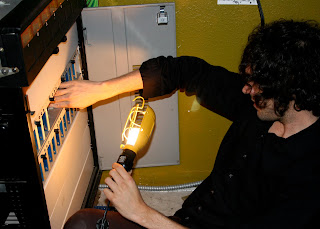
Neilsen: It’s weird. Luckily we made it a point to make a shitload. Cause we’re doing basically the same fuckin’ thing right now, it’s just a lot more songs.
Do you think that’s part of the success?
Neilsen: Yeah, to give us more to choose from. And to keep us motivated and happy. Playing the same shit is a real wear and tear, especially when you’re tired. When it’s everyday it’s tough. But the whole thing is pretty mapped out for you. When we were doing it on our own, it’s not mapped out, we can do whatever the hell we want. But now, we’ve started adjusting to being on a label, there’s timetables for everything; when records should be released. And you gotta know a lot earlier, cause you gotta get it done two months, three months before that deadline, and have the art done. And at the same time, the tour is starting to become something, and you’re like, ‘ugh.’ But luckily you’re still making something that you like, so that’s cool, but it’s kind of weird getting into the swing of deadlines. I failed miserably in school. To go back into that mode of, ‘Oh shit, gotta get this done or dad’s gonna be pissed.’ It’s kind of crazy. And that’s when the decision to take a break comes in. If we were on it, the 7” we are releasing would be a full-length album. But it’s not, so we’re not going to have a full-length. And then we can put it out at the end of Summer, but that’s not exactly the time to put out a record. We’ll put it out next February, so there’s gonna be a huge gap here without music. So then you start thinking, ‘aw, well fuck man.’ Luckily we’re going across the country to all these places where nobody knows us, they’re tiny, and everything is brand new to them. The people around here are probably like, ‘same fuckin’ Growlers show.’ So that’s why we don’t really play here too.
You guys don’t play here that much, and I don’t think people are bummed on it. From an outsider’s perspective, you could probably turn around and play another one.
Neilsen: Yeah, I like playing at home a lot more. But when we were playing a lot, it felt like we were dragging people out every time, and it was kind of more of a scene, and less of a ‘come see the Growlers’ thing.

So where do you like to play when you’re home?
Neilsen: Alex’s Bar in Long Beach is cool. Yeah I don’t know a favorite place, we need to find some. The best place is at a big warehouse basically. And a house party is cool, but you can only fit so many, and it’s easily broken up. A warehouse, they tend to go all night, and little kids get to get drunk and have sex in the corner, and pee everywhere. They’re more fun, compared to the venues.
So are you guys writing at all right now?
Neilsen: Yeah, Matt’s got a shitload of songs, Kyle’s got a bunch of songs, Scott’s got some basslines, I have some. So we just need to kinda start combining, just do a little bit you know.
Do you write yours as vocals?
Neilsen: Yeah, separate. And then on their stuff I just create a melody to it over the top. The 7” is gonna be in April, and the full length won’t be until the end of Summer. We wanna get a massive amount of songs to narrow it down and do a small amount. Maybe like 50 songs, and then do ten songs or whatever.

Do you have a certain vibe you’re going for, or do you just kind of create as much as you can?

What does it take to write a song? Why do some people string together chord progressions so effortlessly, while others slave over every piece? Is it important to tell a story, or does the inclusion of lyrics occur only so a melody to hum with exists? Do the technical musicians quell the simpler songwriters, or can a simple three-chord change inspire more overall emotion from the listener? And in the end, is it the audience member that gives the song life?
For some, songwriting is an organic process that grows in the seeds of personal practice, while others find their stride within the jam circle. Records are made in so many ways these days, whether it involves capturing rough cuts on tape recorders, tunes made in warehouses and garages on personal digital devices, or albums produced by a professional studio that house ProTools, plenty of equipment, high-powered computers, and the finest acoustics. As I carefully studied each perspective, I began to realize there was no cut and dry manner of making a song. Most musicians that spoke of his or her inspirations, stuck to specific songwriting practices of their own. Others revealed that they enjoyed reinventing themselves by morphing in phases with the style of their music, just as an individual morphs during his or her lifetime.
In the end, the hunt for the key to songwriting became clear: it is about self-expression, and discovering a Harmonia with yourself and your bandmates. To be culturally aware is to be an artist, and the truly great songwriters speak and play from their heart in reference to the world around them. They create with the intention of portraying the emotions felt by humanity, but that most individuals are unable to express because they are not practiced in the process of artistic interpretation. That being the case, it is never too late to start thinking about the music we choose to listen to, and why it is relevant in our day-to-day life. Then, as an audience member and fan, it is always possible to be part of the journey of songwriting.
Keep and eye out for interviews from:
The Growlers
Billy Kernkamp
Stanley Lucas Revolution
Honeypie
Echo Echo
Tyler Ellis
Omaha
Railroad to Alaska
Snakebit Drifters
Drums and Color

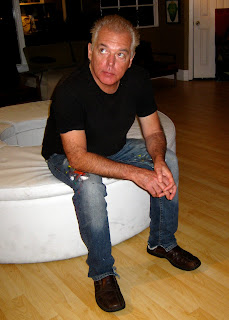
Born into a tumultuous life in Venice Beach during the 1950s, Heard remembers, “The smog and the heat, the congestion and the crowds. Everybody was on edge, irritable, and not happy.” He inevitably became inspired by the chaotic world around him, artists like Rick Griffin, and the expansion of rock and roll. “I can’t paint in silence,” he explains, “There has to be audible things going through my brain at the same time. If there’s no music, then I’m unplugged, and things won’t flow.” As a young man, Heard took a dishwashing job at a local eatery in Venice, then eventually moved into the kitchen. His experiences as a novice chef helped him recognize that fine dining was the epitome of creative expression, just like the drawings and painting he continued to work on diligently. After a few years of experience, Heard crossed the county line into Orange County to advance his career as an accomplished chef and caterer.

Today, the bulk of Heard’s collection has taken over every inch of every wall inside the Find Gallery. He chooses to develop his imagery steadily, often taking multiple months and years to perfect his artistic expressions. The clashing urban myths Heard experienced in Orange County during his time as a chef are portrayed in his panel painting, Lost In OC, where the sprawl of suburbia and packaged theme park entertainments clash with the surf, entertainment, and culinary culture that Heard was constantly surrounded by. His images can seem a bit vulgar at times, be he explains that, “My work has to grow on you, it’s not something you immediately like. I feel like you’re drawn in, but as soon as you get up close and start to view the imagery, it pushes you away. I wouldn’t know how to put it into words, other than ‘organized chaos.’” Each composition hosts twisted, yet elegant forms that Warren has trapped between the mayhem of his intricate color-layering process and detailed line-work, creating a theme of beauty in disorder.

The personality of each work is brought to life by applying a mixed technique, using oils, pastels, and Pentel markers to precisely render anatomical features, while exploding the traditional picture plane with cubist- inspired breaks of time and color. As for knowing when the intricate details of the final product are finished, Heard claims, “For any figure, there’s probably seven layers, or stages. I let it evolve. Even compositionally, I know there will be this here and that there, but what they will look like when they’re done, I don’t know. I let it flow, I know when it’s not right.” Although Heard’s extensive collection is now protected within the walls of the Find Gallery, many of his pieces have vanished over the last decade. “This only half of it,” he states, “All the rest is gone. Sold, given away, painted over. There are five paintings under some of these pieces. They’re all completely different. They’re there, and they can see you, but you can’t see them.” Despite regretting the loss of a few key pieces, Heard is enthusiastic about retrieving the majority of them. No matter how much of his work disappears, he claims that, “I’ve gotten to a point where, it doesn’t matter, something will always keep coming. I never have a block, and I’m never not inspired. I wish I could paint three at the same time.”

On March 12th at the Find Gallery, Heard will finally reveal the remarkable power and grace of his work to the public during his first show in years. His intense style celebrates our human condition, our passions and vices, and reconnects humanity with the harsh circumstances of Southern California culture. And while he may never escape the savage reality of Orange County, Warren Heard will continue to patiently sit, accompanied by his accumulation of paint tubes, pens, and jagged wooden palates covered in dark layers of color. Day by day, he will find a way to create some sort of makeshift canvas so he can continue to steadily layer section by section of the next chaotic abstract concoction he chooses to reveal.


Something about certain chord progressions, guitar riffs, and drum fills, whatever their variation may be, makes the blood boil with adrenaline. Combine that with well-executed, theatrical metal vocals, and the listener is transformed into a human bullet, aimed for destruction. When listening to the new EP, titled “Salvation,” from Costa Mesa locals, Railroad to Alaska, I can’t help but feel the need to put on my mean face and scream at the top of my lungs, “Take time to open your eyes, you know you signed on the line!!!” Lyrics written by front-man, Justin Suitor and band artist, Ryan Williams, are filled with insightful satire towards cultural phenomena like the Jonestown Massacre and the modern principles spawned by Capitalism in America. Combine that with Suitor’s vocal fervor and precision on lead guitar, bass and booming backup vocals by Justin Morales, perfectly-placed rhythm guitar by Jeff Lyman, and intricate drums from Derek Eglit, and you have a group of what may be the best emerging technical musicians in Orange County.
Returning to Mike Troolines at Sound Asylum in Santa Ana after releasing their first EP LuckyBearClawDoom in February of 2010, Railroad releases their second, containing four new tracks that are more metal than any orchestration they have released thus far. First is “Handsome,” the gritty tune that makes playing in 5/4 seem effortless, and tells the tale of the manipulative Salesman conning the masses. Continuing on, you’ll discover the heavy-hitting beats and jagged guitar riffs of, “The Real Thing.” Third is, “Mum,” that showcases a frightening power that emanates from each member until the very last second. Last, is the album-title track, “Salvation,” the only composition that mellows out, hypnotizing the listener for a moment with melodic chants, then building up to an eerie crescendo that sends shudders down the spinal cord.
Railroad to Alaska has recently showcased these new editions throughout Orange County and Los Angeles venues. On top of that, Volcom Entertainment has recently grabbed them for local events like the annual Dam-Am Skate Competition, and industry nights at local spots all over Costa Mesa. Check out “Salvation” at the upcoming Best Live Band Showcase on February 1, hosted by OC Music Awards at the Tiki Bar in Costa Mesa. Stop by and grab a copy of your own before the ensemble progresses their way out of Orange County, and into the public spotlight for good.
“Salvation” Track List:
1) Handsome (3:45)
2) The Real Thing (3:41)
3) Mum (4:12)
4) Salvation (6:46)

Stepping back into our own cognitive history and recording the events that occurred around us is the means of preserving the future. That is the tactic of John Van Hamersveld in his recent autobiography release, My Art, My Life. In Southern California, the beach and suburban communities have spawned a web of financial institutions, film and media groups, the music industry, universities, surf companies, and a respectable art scene. In the middle of the social, cultural, and political adaptation occurring from the pivotal periods of time that are the ‘50s, ‘60s, and ‘70s in America, was the long-time SoCal artist, John Van Hamersveld. Through these influential decades, Van Hamersveld captured the culture in his designs, all while standing aside other artists like Bruce Brown, Rick Griffin, The Rolling Stones, and many other social icons that helped create the surf/hippie/rock culture in Southern California.
As a young child, Van Hamersveld left the East Coast and joined the ranks of the Palos Verdes, Santa Monica, and Malibu surf crowd. Adolescence brought him in contact with the likes of Velzy and Miki Dora, both of which cast the ultimate image of a surfer to the teen. This surf lifestyle combined with a budding artistic talent lead Van Hamersveld into collaborations with Bruce Brown of The Endless Summer, and John Severson of Surfer magazine. With the inevitable inclusion of the outlying film, media, and artistic communities of Los Angeles, the progression of surf culture into pop culture began.
Leaving his surf roots behind, Van Hamersveld headed towards the music industry. Corporate hierarchy was being erected in the music business during the ‘60s just as he was entering as a design and print maker. After classes at the Art Center, came the creation of Pinnacle Productions. Van Hamersveld and partners were able to build a successful concert production company that hosted musicians like Jimi Hendrix, Cream, and the Grateful Dead. But as the rock stars became marketed by the growing industry, the hippie masses that funded the drug culture began to be manipulated by the image of their own rebellious behavior that was being recreated and sold back to them by the corporate businesses. After less than a year, Pinnacle felt the echo of this descent and absolved.
Located in his personal studio near the Sunset strip, Van Hamersveld was able to absorb more art classes at Chouinard, and eventually secure a strong artistic relationship with Capital Records. Beatles, Jefferson Airplane, and Kiss were just a few of his album cover clients. But after a hectic run in the underground art scene, Van Hamersveld found himself in Silverlake in the early ‘70s, in his Johnny phase, escaping the web of illegal drug activity occurring around him, attempting to shut away and make album art like Exhile On Main Street for The Rolling Stones.
Throughout the pages of My Art, My Life, Van Hamersveld offers a timeline of Southern California from an eye that is constantly configuring how to capture humanity is his designs. In the retelling of his journey from the surf industry to hippie culture, Van Hamersveld remains blunt and honest of his friendships, business accounts, and artistic counterparts. As he reaches the late ‘70s, the corporate world had taken a stranglehold on the youth by effectively manipulating them through pop culture images. The loss of innocence at this time leads to the downfall of the counter culture, and the rise of the corporate world. But by stepping back with John Van Hamersveld through his adaptation, perhaps the younger generations can deconstruct the social structure he faced, learn from his trials and tribulations, and reconstruct pop culture, free from corporate puppeteers.

In an age of technology, evolution is expected in all aspects of life, including the music industry. All around the world, intellects strive to design the new, the more compact, the faster, the cleaner, the cheaper. Day to day, the public throws away the old and swipes those credit cards for the cutting-edge. Years of this type of public spending have affected the way an individual listens and collects music. Ultimately, the form of media each person chooses is based upon their life-style. For fast-paced living that includes constant travel, digital media is the most favorable. But for avid vinyl patrons, a little extra effort and a little more relaxation is appreciated. Listening to wax is a means of musical meditation in which the mood is of the utmost importance. There are specific times that are best to drop that needle. At home. With a joint. With some wine. With some whiskey. With someone you love. With close friends. With the door closed. With the windows open. With a candle. With the lights turned low. Each individual has their own way of listening. And for the community of record collectors that love this way of living, vinyl will always survive.
Despite the digital craze, shops like Burger Records in Fullerton, Factory Records in Costa Mesa, Vinyl Solution in Huntington Beach, and Origami in Silverlake still litter the Orange County and surrounding, offering a full selection of new, used and reprinted record albums of all genres. In Costa Mesa, right next to Little Knight, is the newly reclaimed Factory Records, known by most as Sound Trolley before Dave of Noise Noise Noise took over a few months ago. Peek through the old white wooden door windows, and notice a rack filled with free magazines, show fliers, CD demos, and art hiding in a nook on the left. Despite the close quarters, Factory makes use of every corner, only adding the best vinyl to the already exquisite collection. Each album features a white written tag stuck onto the protective plastic cover. On these stickers are in-depth, and usually hilariously sarcastic, scribbles of explanation about the history, significance, and condition of that specific record. All around, back-stock peaks out from the inside of wooden crates that litter the lower portion of the racks and unused areas of the shop. There are a few 8-tracks, cassettes and CD’s, but this room at Factory will be forever dominated by vinyl.
In this age, thousands of songs can be stored and downloaded through iTunes, CD Baby, and the quick and convenient bit-torrent sites. Going digital has also allowed the masses to make their own musical concoctions in living rooms, garages, and local lockouts for a reasonable price. From the studio, local bands then cut and mix their product with user-friendly music editing software like Garage Band and Sound Studio. But while the trend seems to be all about electronics, most musicians are still unable to give up and throw away their beloved vinyl collection boasting Bowie, The Rolling Stones, The Beatles, Pink Floyd, Iggy, and Sabbath. Recently, this fairly expensive manner of music production has outlasted decades of change, and has continued to survive in the hands of an artistic community that values the sound produced when the needle gently drags over the creases of revolving pressed vinyl. Not only are these individuals collecting the music of the forefathers of modern rock, punk, and hip-hop for the next generations, but they now are reverting back to releasing vinyl themselves. Musicians like Local Natives, The Growlers, and Gestapo Khazi are making their own place in vinyl history by releasing wax of their own, developed from digital tracks.
For the men in charge of Burger Records in Fullerton, a heightened vinyl obsession has inspired them to create an authentic record store and publishing label in Orange County. With a few local bands under their belt, Burger has succeeding in pressing vinyl and making cassette tapes on their label that’s also named Burger Records. To get to the shop, just cruise past the industrial buildings that line State College Blvd., past the remains of an old orange grove, and on the left is Burger. Inside the glow of neon green walls, they offer recovered originals, underground current releases, and a few reprints. The interior design is retro, with a collection of music oddities of strange origins littered everywhere. To give back to their customers, Burger constantly hosts movie and live music nights, motivating the locals to come kick back with fellow music lovers.
With the success of CDs in the early ‘90s, record players hit a major lull in production. From there came the decision among record-holders; hold onto the vast collection, let it fade away, or sell it off to shops for dimes. CD’s took over, with digital soon following, and each new format operated on more efficient equipment, causing record players to fade away. As CD’s and iPods filled the shelves, vinyl finally took a backseat to the cleaner and more convenient digital technology.
In a modest strip mall off of Beach Blvd hides the record store gem, Vinyl Solution. Step through the door and find yourself stuck in a world of punk and rock memorabilia that covers every inch of the establishment, including the ceiling. The expensive stuff rests on wall racks to the left, protected by a glass case that serves as a barricade and location to place the selection of alphabetized 45’s. Buttons, shirts, and posters of bands like The Misfits, The Cramps, and Ramones fill the little bit of space that the records don’t reach. Upon entering, prepare for some shop-talk about the intricate levels of record history, involving such precise knowledge as release dates, specific concert data, and album artwork. Not only is it easy acquire a favorite Beatles album there, but you’ll learn a little about it before you leave.
Record stores are the backbone of the music industry, and the key to its success. When major corporate retail locations like Best Buy now offer vinyl, all boasting shiny gold 180 gram vinyl stickers on shrink-wrapped plastic, it is apparent that the music industry has taken a wrong turn. Without the vinyl junkie who strives to perfect the oral history of music, peddle albums to music appreciators, and promote local and popular music everywhere, record companies and musicians will ultimately fail. Bands must now rely on selling merchandise first-hand in order to make the smallest of profits, but most fans are unable to go to purchase that merch because that band cannot afford to tour through town. On top of that, concert tickets that used to be sold at record retail locations are now claimed by Ticketmaster and LiveNation, which monopolized the market on online ticket sales.
Head to Silverlake, past the lake in Echo Park, and up to Sunset. On the left, tucked near the venue The Echo, is Origami Vinyl. Simple, chic wooden bins extend, implanted on each side of one long corridor, hiding walls that shine with a grey winter glow. All the way in the back, a classic metal spiral staircase winds up to an empty loft area for bands to play in-store performances. Each month a new collection by a local artist is placed on the walls above the record racks. Despite the detached music scene in Orange County, this portion of Los Angeles has figured out a way to create a local neighborhood of artists, musicians, and venues. Origami sits right in the middle of it all. That makes it easy for the shop to connect with local venues like Spaceland, for which they promote and sell concert tickets. Musicians and a handful of record companies are also local, allowing Origami to work directly with artists to purchase wholesale vinyl, instead of corporate distribution companies. The middle-man is then cut out, leaving most of the profit to the artists.
Sometimes an enigma, despite the odds, secures its spot in history. In a world of digital, vinyl seems to survive even with the battle between tape, CDs, and digital audio files. Perhaps it is because some of the most passionate artists and music appreciators live in the world of vinyl. The true collectors that are scattered throughout record stores across the nation will always be obsessed with enjoying the music they surround themselves with. Each band, song, album, and artist will stay with that collector forever, even if their vinyl collection doesn’t. For them, music is tied to personal memories; moments made in the past in which one specific song is the catalyst for reminiscence. A type of spirituality is engrained in the rich sound waves of vintage vinyl. And as it still carries merit in this modern time despite the desire for digital, performers of the future will no doubt continue to pay tribute to vinyl by pressing their own LP’s to live on forever as a collector’s items.
